How to Live With Stairs That Don’t Follow the Code
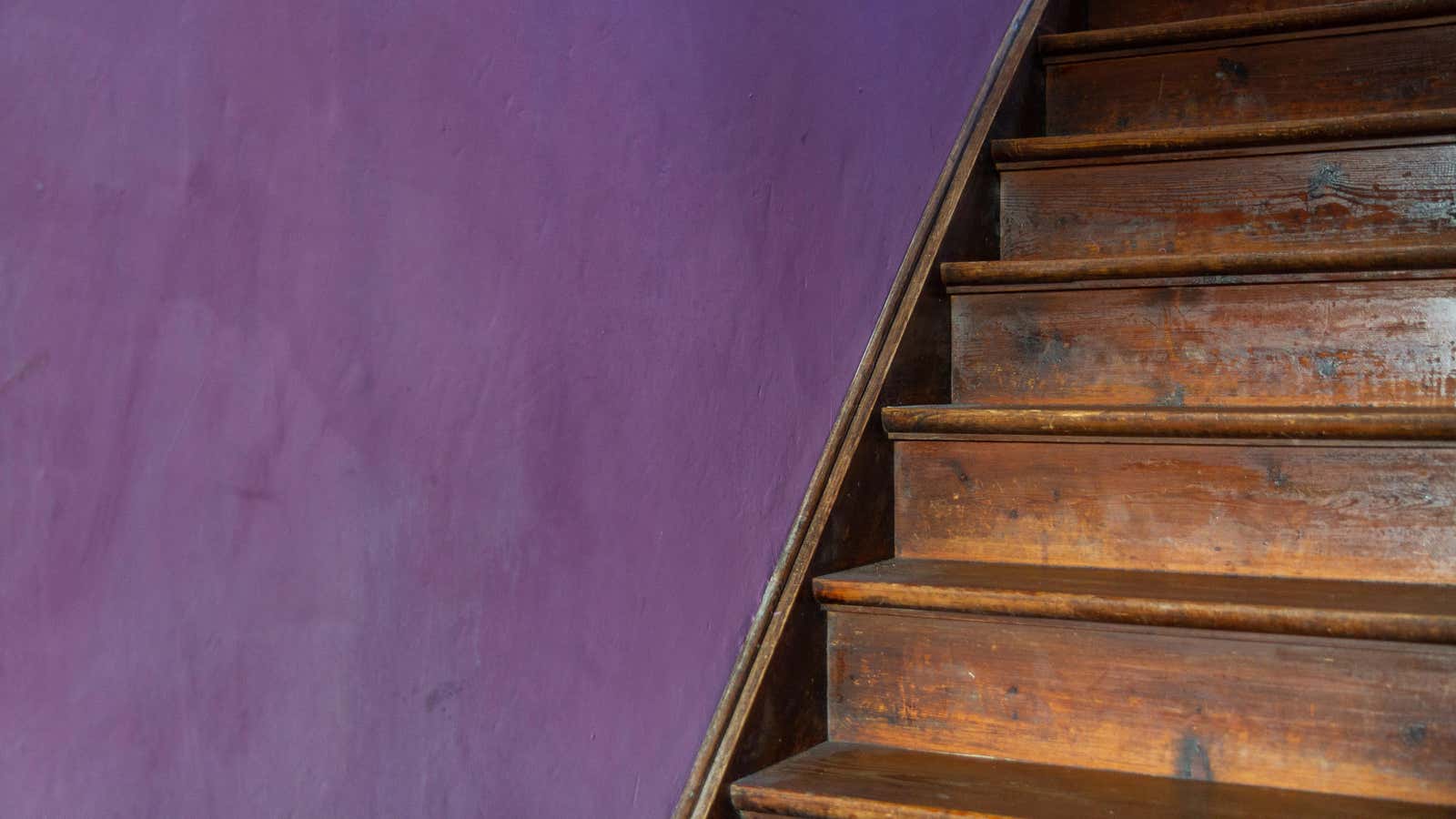
When my wife and I bought our house a few years ago, we were in awe of its age-old charm . Then I fell down the stairs – more than once. On sober examination, our ancient staircases, designed and built in an era before concepts such as ” building codes ” existed, have an unusually steep slope and, at the same time, have shorter steps. I have since learned to climb the Stairs of Death without incident and have begun giving every visitor to our home a brief safety lesson before sending them to the guest room.
So why don’t we just tear down the ladder and replace it? Because it is impossible.
Well, not impossible . Changing the stairs will simply require a massive renovation of the entire house. If you’ve bought (or are thinking about buying) an old house with an upgrade plan, your old stairs may be more of a headache than you imagined. Here’s what you need to know about living with those old, “grandfather” stairs.
Time to Building Regulations
If your home was built before the 1950s, your staircase was probably built by a carpenter who practically fit it into the available space . This does not necessarily mean that the stairs are unsafe. It just means they took measurements and squeezed into the stairs as best they could, even if that meant they had to be super tough to fit.
As uniform building codes became more relevant in the mid-20th century, many of these stairs were “legacy”, meaning they no longer meet codes but do not need to be replaced as long as they remain in working order. -is. In other words, your original non-compliant staircase is perfectly legal and no one will force you to replace it unless you try to substantially alter it. You can usually make aesthetic changes to your stairs without any problem, but if you decide to rip them out and replace them, they will suddenly become subject to the current building codes in your area and you must comply with them.
This can be a problem because most old stairs are quite steep when compared to modern building codes . Stairs are defined by a rise (measured from bottom to top, each vertical of which is called a riser ) and a run (its horizontal length, where each step is called a tread ). The higher your instep, the shorter your run can be. Old stairs usually had risers of about nine inches with nine inch treads, but these dimensions varied according to need – in some older houses the stairs are almost as steep as the stairs. Modern regulations tend to call for much lower rises, making the ladder much safer, but also much longer. New stairs also usually need to be at least 36 inches wide, whereas older stairs were often much narrower.
These different standards mean that much more space is often needed to replace an old staircase; if the stairs have to be wider and longer, it will be very difficult (or impossible) to fit them in the same space.
Living with your “grandfather’s” ladder
So what can you do when your contractor tells you that replacing your stairs will require moving two load-bearing walls and possibly buying your neighbor’s house to build an addition? You have two options: you can increase your renovation loan and ask an architect to figure out how to make your stairs comply with the code, or you can figure out how to live with them.
If you weren’t (or weren’t) planning a major renovation, remodel an existing staircase instead. Keep in mind that your ladder is outdated until you change your climb and run. In other words, it’s not the staircase itself that matters, but the existing dimensions . You can replace almost every element of your existing staircase – steps, risers, railings – without having to be replaced to comply with regulations, as long as you keep their original characteristics and your “new” staircase matches the same physical space. As long as the rise of your stairs is not an obstacle, you can achieve a “like-new” look without violating local building codes.
If your old staircase is solid, you can complete the aesthetic renovation by covering the steps and risers with something like Cap-a-Tread or carpeting, giving your staircase a whole new look and feel without changing a single dimension that might affect their compliance with the code.