What to Do If You’re Struck by Lightning (and How to Avoid It)
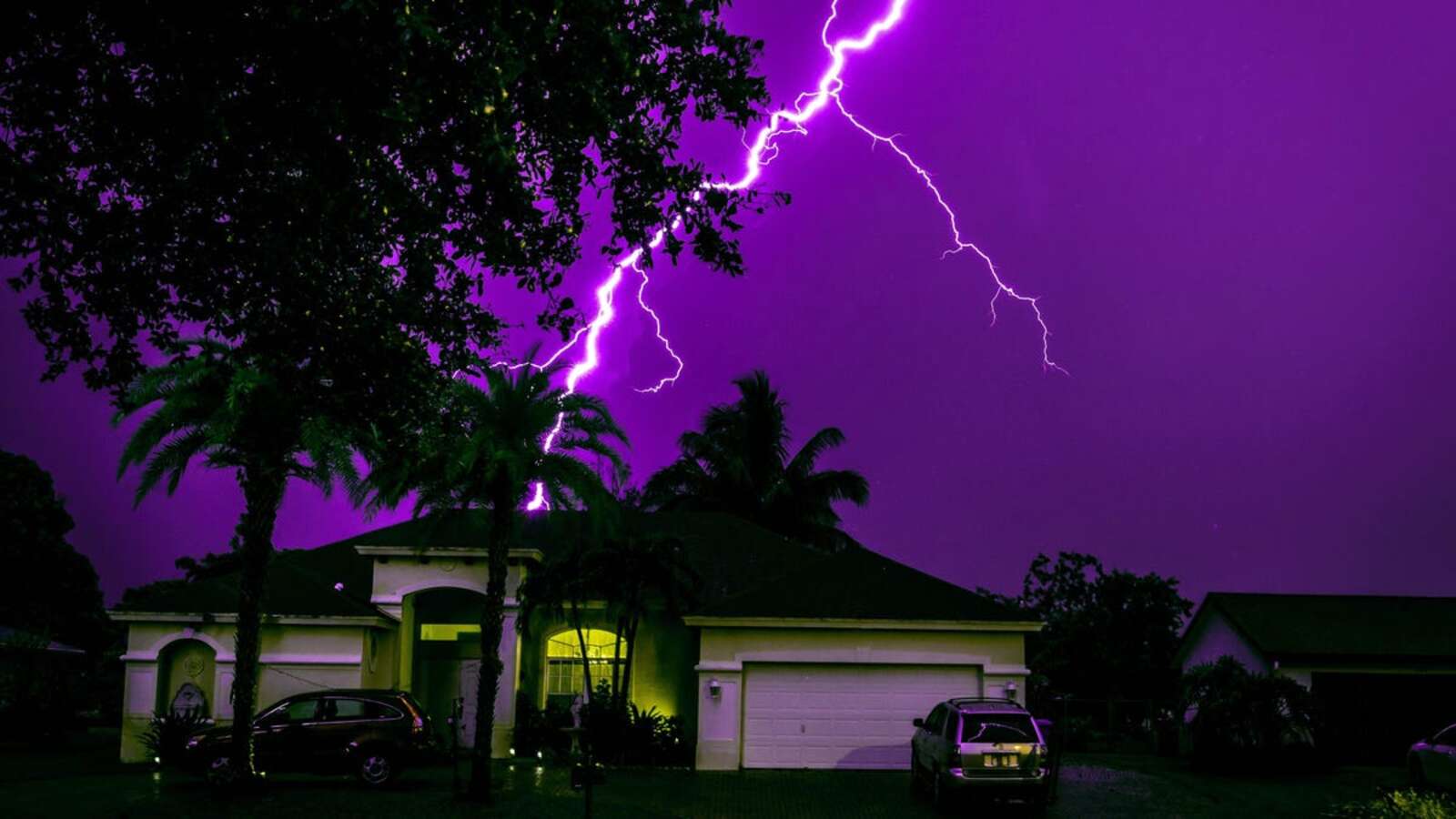
We use the phrase “you’re more likely to be struck by lightning” all the time to describe unlikely events, but according to the National Weather Service , about 20 people are killed by lightning each year and hundreds are injured. No, you shouldn’t panic, but you still don’t want to be one of those people. Here’s how to avoid being struck by lightning and what to do if you ever encounter this statistical anomaly.
How not to get hit by lightning
The most obvious of them: do not go outside during a thunderstorm. You already know this. Let’s assume that you are stuck outside during a thunderstorm; The New York City Department of Health advises you to do the following:
- Avoid open fields, hilltops and ridge tops.
- Stay away from tall isolated trees or any other high objects.
- If you are in a group of people, spread out to avoid the transfer of electrical current from person to person in the event of a lightning strike.
- Stay away from water and anything that might be wet
Contrary to popular belief, water and metal do not attract lightning, but they conduct it and can carry it quite far. Since the current travels long distances through water and metal, it is best not to be near either of them.
In addition to watching the weather on your radio or smartphone, look for visual signs of an approaching storm: towering cauliflower-shaped clouds, dark daytime skies, distant thunder, and, of course, visible flashes of lightning. Climb inside and take cover as soon as you notice these signals; don’t wait for lightning to strike nearby.
Even if you are indoors, you still need to take precautions to avoid certain types of lightning strikes. We’ll detail the different types of lightning strikes below, but for now, here’s what to do once you’re inside, according to the Centers for Disease Control and Prevention :
- Avoid water – don’t shower, wash dishes, or touch plumbing during a thunderstorm, as if lightning had struck the house, it could travel through pipes or water and hit you .
- Do not use electronic equipment, especially anything plugged into an outlet.
- Do not use a landline phone, but feel free to use a cordless or mobile phone, especially if you need to call for help.
- Do not lie down or lean on concrete floors, as there may be metal wires or rods inside them that lightning can pass through.
What to do if a loved one is struck by lightning
If someone near you is struck by lightning, here’s what you should do, according to the New York City Department of Health, the Centers for Disease Control and Prevention, and the California Department of Health :
- Call 911 immediately.
- If more than one person is hit, help those who are unconscious first, and be aware that they may appear dead at first.
- Move the person to a safer location if there is a constant risk of being struck by lightning.
- Perform cardiopulmonary resuscitation immediately (and know that you are safe as there is no electrical charge left in their body).
- Cover the person with a jacket or blanket to prevent hypothermia.
- Take care of anyone who was injured but remains conscious next, but be aware that their wounds may include burns and fractures.
What to do if you are struck by lightning
It’s possible you’ll pass out from the lightning strike, so hopefully someone is around to help you. If you manage to stay awake, call 911 immediately. Sorry, that’s all we have. The consequences of being struck by lightning can be quite brutal , so the most important thing is to seek help as soon as possible.
There are different types of lightning strikes
According to the National Weather Service , there are actually five ways that lightning can strike a victim, but any of them can be fatal.
- A direct strike occurs when a person becomes part of the main lightning channel, probably due to being in an open area. They are not particularly common, but potentially the most dangerous.
- A side surge or side flash is when lightning strikes something higher near the victim and some of the current travels towards them. That’s why you shouldn’t hide under a tall tree.
- A ground strike occurs when lightning strikes an object and the energy propagates outward from the strike, in and along the ground. If you are outdoors near a strike, you could potentially become a victim of ground current, but be aware that ground current can also flow in concrete floors containing conductive materials.
- Conductivity causes most indoor lightning strikes and some outdoors. Anyone who comes into contact with anything connected to metal wires, plumbing, or metal surfaces protruding outwards is at risk. For this reason, do not shower, use faucets, or touch corded phones during thunderstorms.
- Streamers , according to the NWS, “evolve as the downward moving leader approaches the ground. Typically, only one of the streamers makes contact with the leader as it approaches the ground and provides a path for a bright retaliation; however, when the main channel is discharged, the same thing happens with all the other streamers in the area. Basically, again, this means you should try to get inside when a storm approaches.
Seriously, how likely is that?
Do not panic. Lightning strikes are extremely rare. Between 1989 and 2018, the U.S. averaged 43 lightning deaths per year, according to the NWS . Only about 10% of those affected die, although 90% of survivors have some degree of disability. Staying vigilant and taking the necessary steps to avoid a strike will help you avoid becoming one of them.